Kei hea te taunga mai o aku kupu?

(Where will my words rest?)
Terehia Biddle
abstract (pdf)

Archives NZ is official repository for Treaty of Waitangi and other historical documents.

Relationship objectives with Māori

  • Can act with respect but question is whether Māori feel respected.
  • Trust and have confidence
  • [missed two]

Obligations

  • Treaty obligations
  • legislative requirement under Public Records Act 2005
  • Waitangi 262 claim (flora and fauna) with respect to cultural and intellectual property issues – brought against Crown by 6 iwi asserting Crown breach of Treaty by agreeing to international agreements that affect indigenous flora and fauna and intellectual property rights, eg commercialising sacred knowledge

Building blocks

  • Statement of intent – responsiveness to Māori as a strategic priority
  • business planning documents and performance measures have sections covering responsiveness to Māori
  • Individual performance-based reviews from the general manager down

It’s hard to build a relationship with Māori if internal infrastructure isn’t set up to support it.

In last 5 years has been an increase in the number of iwi requests seeking assistance to support their efforts to access information; increase in number of iwi/hapū organisations seeking solutions in management of iwi records and information. Recognise that there’s an ongoing expense attached to maintaining records. Looking at working collaboratively. Some movement from full repatriation to virtual repatriation.

Important to have conversation first rather than make assumptions about where conversation is to go. Easy to forget the large population group you’re serving when you’re dealing with just a few people face-to-face.

Opportunities

  • establish precedent for future Māori-ArchivesNZ relationships
  • create win-win situations between ArchivesNZ and Māori
  • Hands-on cultural awareness training for staff

Projects they’ve worked with:

Kai Tahu – pilot project selecting items that local hapū Ngāti Tūahuriri had. Turned out they had a system set up so ArchivesNZ only needed to create hyperlinks and they could make sure that information that was only for their people would remain secure; whereas information that could be shared with the public could be made public. Was some concern about how much information should be shared. Some didn’t feel comfortable sharing it; others pointed out that their people lived across the globe. So now have mechanisms in place for those who can prove whakapapa.

Currently Taranaki Reo revitalisation Project. -Language identified as being in state of decline. Identifying and digitising records.

Tūhoe project to identify historical records re land area now known as Te Urewera National Park.

Common themes:

  • one size doesn’t fit all
  • Māori are clear of where they want to be positioned in the work, discussions and decision-making process
  • aware of significant role ArchivesNZ can play in Treaty claims
  • want to be part of solution

Guiding principles

  • build a strong relationship with māori
  • competency in te reo and (local) tikanga adds to credibility
  • kaumātua provide guidance and advice – to get into communities, and talk to people, kaumātua open the door
  • iwi determine the scope for the research
  • iwi determine the criteria for quality of data – needs to be Māori-intuitive
  • involved in all phases of project, determining milestones, etc
  • iwi-nominated kairangahau (researchers) are appointed to do the work.
  • protocols re distribution of product rests with iwi
  • work conducted in a culturally appropriate way
  • database that identifies items of significance needs to comply with ArchivesNZ standards and meet needs of iwi
  • don’t compromise originals
  • be clear about what is possible
  • when necessary, say no – gently
  • manage expectations and relationships well

Questions
Q re breakdowns in relationship
A: it occurs mostly when we let our ego get in the way and aren’t willing to say we’re wrong. Need to keep focus not on ourselves / our department, but on people we’re wanting to encourage.

Q re records that might be borderline on what should and shouldn’t be accessible
A: records will always be controversial, it’s a matter of interpretation, fortunately iwi-nominated researchers pull out only records that they believe are of significance to them, so it helps that they’re the ones making the decision.

Q re pay of researchers
A: Up to recently salary came from ArchivesNZ baseline budget. The researchers come in and learn all the jobs there so leave with good experience too.

Q re whether there’s any homogenisation of Māori viewpoint vs iwi differences in a national organisation
A: Not their job to make judgement, it’s about each iwi. Each iwi have their own mana.

Q re Māori-intuitive finding aids
A: Have been working on this since the Tainui project – this became the platform on which they can improve so they now have a template. 16 fields to complay with professional standards, now have added to this fields to include names of people and places mentioned in the records. Have tried to keep it simple as are looking to the database being usable by pākehā colleagues.
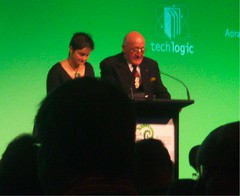
Copyright vs community in the age of computer networks

Richard Stallman (homepage)
abstract (pdf)

Brenda Chawner, chair, says Stallman is “The most influential people no-one has ever heard of.”

Talking about whether the idea of free software extends to other works. User deserves:

  • Freedom 0 – to run the program
  • 1 – to look at source code, verify what it’s doing, fix it to make it work as you need
  • 2 – to help friends by sharing software with them
  • 3 – to help community by publishing changes to software

If one of these freedoms is missing then it’s proprietary. This keeps users divided and helpless.

Text isn’t the same exactly as software – no source code. So mostly affected by copyright. This has developed along with copying technology. Originally had no economy of scale – ten copies took 10 times as long as 1 copy. Copies were made in a decentralised manner. Anyone who had a copy and wanted to copy it could. –Unless the local ruler didn’t like the book, “but that’s not copyright, it’s something closely related, which is censorship”.

Printing press has economy of scale. Took time to set up, required money and skill, but once it was set up you could produce many many copies. So copies were made in a centralised manner. And this is when copyright began. In England it began as a method of censorship in 1500s (originally to censor Protestants, then to censor Catholics). You’d apply to crown and get perpetual monopoly to publish a title. This was abolished, and in the 1680s reestablished as a temporary monopoly for the author of 14 years. It was a means of promoting writing.

When US Constitution was written they decided that Congress could optionally adopt a copyright law in order to promote progress, and it must last a limited time.
In time of digital technology, one-off copying has benefitted so we’re back almost to the time of decentralised copy-making. Copyright is no longer adapted to the technology. It’s now a restriction on the public, controlled by publishers in the name of authors. “It’s no longer easy to enforce, no longer uncontroversial, and no longer beneficial.”

Copyright is supposed to encourage authors to write more – but how does extending copyright in 1998 encourage the authors of the 1920s to write more? And the value of 20 years of copyright 70 years in our future is too small to actually change anyone’s actions. The real reason of the law is that certain companies have lucrative monopolies and want them to continue.

Originally copyright regulated certain activities while others were simply allowed. Now, companies want to set up a pay-per-universe by turning our computers against us using DRM. First by technology, until people figured out the formats and published free software – then by law, by criminalising this software. Then by technology again. Stallman says that a conspiracy to control our computers in this way should be prosecuted to price-fix.

AACS was broken and the key was published (illegally) by being included in a photo with cute puppies so it got shared faster than it could be deleted. (cf also this story)

Blue Ray. “Corrupt disks” will play in audio players but not on a computer. Sony discs install a program to take control of your computer, to hide itself and resist deletion – these are crimes. Also included GNU code which was on a GNU copy-left license – which Sony didn’t comply with. People sued Sony but focused on these specific crimes instead of on their evil purpose.

Fortunately music DRM is receding. But we’re seeing a renewed effort to impose DRM on books. First by taking away freedoms from ebooks; second by convincing people to switch from print books to ebooks.

Publisher wanted to get Stallman’s biography as an ebook to promote their line. He said only if it’s not encrypted. They wouldn’t do it. Eventually he found a publisher which would.

He thinks probably the reason there’s so many stories about electronic ink is companies want us to get excited about ebook readers – which have DRM, backdoors, spyware. Eg Amazon knows everything you’ve bought on the Kindle. You can’t lend it, can’t sell it to a used bookstore, and Amazon can delete your book (which they’ve done with 1984).

“They want to create a world where nobody lends books to anybody anymore.”

Encourages us to spread the message that by using these devices, “Other readers will no longer be your friend” because we’ll be acting like a jerk by having them in a non-sharable form.

He’s happy with an ebook reader which runs free software, no DRM, doesn’t have backdoors, restrict your files. It’s possible to have such a thing. But the companies pushing ebooks “are doing it to attack our freedom and we mustn’t stand for that.”

Stallman says:

  • Copyright should last 10 years from date of publication. The publication cycle has got shorter and shorter – almost all books are remaindered in 2 years and out of print in 3. (Was once on a panel with a fantasy author who said 10 years was intolerable – it should be 5! He wanted to distribute his own book.)
  • Functional works (software, recipes, educational, reference) should be free – these are necessary for your life. (Imagine if the government tried to stamp out “recipe piracy”. Points out that attacking ships is bad, sharing with people is good, so should reject propoaganda use of term ‘piracy’.) Works will still get made – cf recipes, Wikipedia, etc.
  • Works about what people thought – eg diaries, letters, memoirs – should allow noncommercial redistribution of exact copies.
  • After 10 years goes into public domain and you can publish your modifications.
  • Remixing snippets from many places should be legal outright.
  • Sharing copies on the internet should be legal.

“To attack sharing is to attack society.”

Also proposes:

  • Distribute tax revenue directly to artists to promote the arts. This means not in linear proportion to popularity. Based on popularity, yes (eg through polling) and then take the cube root – so 1000x more popular would get 10x as much money.
  • Voluntary payments – micropayments so you could send a dollar anonymously to the artist of the song you’re listening to. You could get a certificate of having supported your favourite artists as encouragement. Make friendly advertising campaigns encouraging “push the button”. (Me: make it a big red button and everyone will want to push it!) Need a good system.

3M Award for "Innovation in Libraries" Finalists Presentation

(Presentations available online)

Auckland City Libraries with the Active Movement programme – biggest problem now is where to park the buggies because it’s so popular. Including video of snippets of the sessions including bubble-blowing. 🙂 SPARC will sponsor this in 50 libraries across greater Auckland area, starting today.

Aotearoa People’s Network Kaharoa (on whose wireless network those of us with laptops are connected!) “Kaharoa” is the largest of the nets traditionally used for fishing. Many stories of word-of-mouth bringing in huge numbers of new users to libraries.

Top of the South – “the prow” referring to the canoe that Maui fished up and which became the South Island of New Zealand. Local providers used. Community continually adding content, comments. Many plans for website to add functionality (RSS, GIS) and content.

Generation Ngai Tahu

Hana O'Regan and Sir Tipene O'Regan

Sir Tipene O’Regan and Hana O’Regan

The Whare Mahara – The House of Memories

The house is an acknowledgement of the past; embraces the present, providing a place to gather and collect; and is about future as a legacy to be there for the next generation.

Intergenerational transmission of knowledge – will look at tools, systems etc that have been used transmitting knowledge in Ngai Tahu.

Transmitting knowledge also means loss of knowledge. With the arrival of the potato, the whare arohe, the knowledge, poetry, references of fernroot disappeared. With the arrival of iron saws, the time-consuming process of grinding pounamu was lost. The knowledge of those who lost wars – their poems and stories – is gone. “History always forgets the losers.” — Tā Tipene

Hana says she and her father have very different perspectives. (Her father interrupts to correct “focuses” to “foci”. 🙂 ) Each generation influenced by events and values of their time. Tipene says older generation may have longer view.

Hana defends “she waits for the movie to come out” by pointing out that it’s higher quality than old reels, and in colour, and she has access to a wider range of technologies than older generations had.

Tipene’s father had benefit of his father’s library; his uncle read Gibbons’ Decline and Fall 20 or so times and also a fisherman, but belonged to “an aristocracy of knowledge”. Tipene was exposed to Dickens before he read it as father read it to him when a child. Father: “What’s the use of Latin? None, thank God. Lord preserve us from the tyranny of relevance!” Tipene: “We all handle knowledge differently.”

Structural questions: – selection, determining what we want to know and preserve; loss – do we want to lose it and not-know just because we’re no longer using it.

Pre-European

  • Priorities: maintaining tribal boundaries, survival, whakapapa, mahinga kai
  • Tools: mōteatea, karakia, kōrero o nehe, pūrākau, whakairo

Early settlement

  • Priorities: adaptation (fish hooks and axes, steel replaced stone), globalised knowledge, new worldviews and worlds (sealskins going to China and Māori travelling in those ships), new commerce/production
  • the written word, books, Christianity

Post Ngāi Tahu Deeds/Treaty

  • Priorities: survival, diseases, introduction of an abstract legal code, retaining land, economic sustainability
  • Tools – petitions, letters, presentations to commissioners

Ngāi Tahu Claim

  • Priorities: documenting the Middle Island land claims and securing fulfilment of South Island Purchase contracts
  • Tools: private journals, whakapapa records, manuscripts, petitions, legal documents

Waitangi Tribunal

  • Priorities: collection of information to prove traditional use rights and mana whenua, establishing the tribal base, political organisation, economic sustainability
  • Tools: secondary and primary research, records of oral traditions, oral accounts of sustained practices and traditions, specialist analysis of mahika kai resources

Ngāi Tahu settlement

  • Priorities: commercial viability, maintaining tribal boundaries, understanding development, redevelopment of tribal resources, moving from claim-mode to looking to future
  • Tools: radio, tv, digital media, websites, print, books, magazines (Te Karaka, Te Panui Runaka) – new tools but still missing something.

Move away from process of repetition to transmit knowledge – can now be recorded and stored and retrieved in other ways – print and video. Don’t have to retain knowledge as parents and grandparents did – can Google it.

Knowledge as entertainment – takes it back to the fireside.

Te Reo as an example – language was neglected for a long time. Why did so many generations raised in the language not transmit it to their children? Sir Apirana Ngata argued that the first priorities of education for Māori should be English, English, English. They felt that the community spoke Māori and it couldn’t possibly be lost, so focused on English. This happened to Gaelic in Ireland too, and elsewhere. Hindsight is 20/20….

Languages (47% endangered, threatened or extinct) are far more threatened than birds (11%), mammals (18%), fish (5%), plants (8%). Particularly low statistics of Ngāi Tahu language proficiency among Ngāi Tahu speakers. Hana’s frustrated that language doesn’t feature on the tribal wish-list; Tipene interrupts to say it features on the wish-list all the time – just not on the “must do” list. It’s a systemic problem: you can’t understand place names unless you have Te Reo.

Hana comments on the “PC-ing” of knowledge that is being transmitted. Lullabies used to include quite graphic depictions of past wars and necessary revenge – what it might look like (“or taste like”). Now sanitising a whole body of knowledge by omitting this.

How will Ngāi Tahu decide what knowledge to transmit to their mokopuna? What will they need to know to be Ngāi Tahu, to survive, and prosper? What songs will they sing?

Call back to conference theme – He aha te mea nui o te ao? He tāngata, he tāngata, he tāngata. (What’s the most important thing in the world? It’s people, people, people.)

Rehearsing the unplannable

After my post about planning the LIANZA 2009 un-workshop I’ll be facilitating, I met with Erin Kimber, who’s going to be chairing the session, and we talked and brainstormed some more. She gave me some really great ideas including one that will probably be obvious to people who’ve actually been to unconferences: that, instead of dividing the time up among the topics, I should divide up the space so there can be three simultaneous conversations going on.

So this afternoon I ran a practice session at my workplace and that’s how we did it. We got just enough people (about a dozen) to make this viable. I started off by going over the ‘groundrules’ and explaining where I was coming from and what we were going to do, except I babbled a bit so that wasn’t entirely clear. Lesson learned: I need to write a script. Word-for-word scripts aren’t for everyone – they can make you sound like a robot sometimes – but I know how to write in speaking-language, and can memorise sufficiently well, and the alternative for me is to babble for twice the time with half the sense.

We did introductions, but even with only 12 people it took too long. So far apparently 86 people have registered interest in the session itself (I deliberately didn’t put an upper limit on numbers. 86, or 100, or whoever turns up, sounds like , but if 86 people are interested then it’d suck to turn away 56 of them. Besides, I think the format really is that flexible) so I’ll go with a kind of “Mexican Wave” of first names, as a warm-up, instead — which gives me the opportunity to add on a few more Mexican Waves of increasingly challenging questions.

The “50 Reasons” exercise worked okay but probably won’t scale up without me providing more guidance – I’m thinking of a variation on Mitch Ditkoff’s suggestion, of answering each excuse with a question: in this case eg “I don’t have the authority” -> “Who does have the authority?”

We divided into three topics, with a spare table in case of break-out topics. With only 12 people, one of the groups dissolved about halfway through; with 86, we’ll probably need 10+ topics to start with.

It wasn’t always easy to follow the “keep it positive” rule, so I’ll focus on that more in the warm-ups. Also in the real thing I’ll be wandering around instead of being a part of any group, so I can intercede and help encourage turning problems into questions.

Other than the one group dissolving and splitting among the other two, there wasn’t any movement between topics. This isn’t deadly because there’s only a short time anyway and people might well want to stick with a single topic — also it might partly have been because the groups were so small — but someone suggested it’d be good to remind people of the opportunity by blowing a whistle (or, less martially, ringing a bell) every ten minutes.

I ended by passing around a sign-up sheet for the mailing list (again, with 86 people, this will be too time-consuming — I’ll go instead with a box for people to put in their email addresses if interested) and then a very brief wrap-up. People suggested it’d be good to have a takeaway, eg come back to the larger group at the end with a bullet-point list of tips – they also pointed out that having “Come up with some bullet-point tips” as a goal would help keep conversation on track. So I’ll do this in the conference session too.

So that’s where I am at the moment. Having that kind of dress rehearsal was 1000% value for money, and has got me even more excited about the conference session itself in two weeks.

Something you mightn’t know about Google Reader Shared items

You probably know that Google Reader has a “Share” option which puts a blog post into your own “Shared” feed so friends who subscribe to that can see what you’ve been reading.

And you probably know that recently they added a “Share with note” option that lets you… well, add a note when you share it so your friends can see what you think about what you’ve been reading.

But what you mightn’t know is that if you select both “Share” and “Share with note” it goes into your shared feed twice (once with and once without the note). This is a bit stupid, but there you are. To stop it happening just don’t select “Share”; selecting “Share with note” all by itself is sufficient.

Links of interest 25/9/09

News
LibLime, an organisation which sells support to the New Zealand-developed open-source library system Koha, has recently announced changes to their practices that are technically legal but many feel don’t abide by the spirit of the open-source license. Library Journal has a basic summary of events with links to key discussions.

A libarian gets a marriage proposal on Ask a Librarian.

Customer service
Being at the point of need discusses placing screencasts, chat widgets, and other tutorials in the catalogue, subject guides, and databases.

Chalk notes as a valid communication format is a library manager’s blogpost about her response to chalk-on-pavement comments about the library. Her follow-up on chalk notes addresses the issue of communication within the library about public responses like this.

Tracking ILL Requests is a “wouldn’t it be neat if” post about providing more information on ILL requests to users.

Resources
The APA has an APA Style Blog with all sorts of handy tips.

10 free Google Custom Search Engines for librarians

5 sites with free video lectures from top colleges

In praise of the Aotearoa People’s Network Kaharoa

A few weeks ago I went on holiday with my family, a trip which involved two days driving to our destination. Somewhere in the middle of the second day driving we stopped in a place called Huntly, which was small enough that I’d never heard of it before, to visit a pharmacy. And I noticed we were parked outside the library, and so I said to myself, “Self, I wonder if Huntly Library has access to the Aotearoa People’s Network?” And I opened my laptop, and lo, it did.

So I used it to tell a bunch of friends that I had random access to the internet, and then we drove away again. Not very *useful* to me, in that particular instance – but still very high on the coolness scale.

More usefully, when we reached our destination it turned out to be just up the road from Paihia Library so every time we got the haven’t-been-on-the-internet-for-hours jitters we could go and get a free fix.

The APNK (also on Twitter) is the kind of thing that’s so cool it’s hard to comprehend how cool it is. When I first heard about it my mind skittered off into wondering what the catch was. (There’s no catch.) When I next heard about it in a conference presentation (which I liveblogged – scroll 3/4 of the way down to 11:33am), I was blown away. Every now and then since, on my standing Twitter search alert for {“library” in New Zealand}, I see quotes like “I’m in library using free Internet.” or “In Taumarunui today using free network connection in the library, this is a great service for the area …” So being able to use it myself was just fantastic.

Links of interest 14/9/09

The National Library of China is celebrating its centennial.

Nga Upoko Tukutuku korero is a new blog for discussion on Maori Subject Headings – each week they post a new question for readers to answer/comment on.

Reference

  • Promoting Library Reference Services to First-Year Undergraduate Students: What Works? (feature article in RUSQ this month) “describes a study that sought to answer three questions:

    1. What percentage of first-year undergraduate students are aware of reference services?
    2. What percentage of first-years seek information from reference librarians?
    3. Through which media are first-years comfortable communicating with reference librarians?”

    The summary on page 4 begins “At least in their first year of college, students respond most strongly to library reference service promotions given in person.”

  • The Swiss Army Librarian posts a “Reference Question of the Week” describing the question and the way he found (or didn’t find) an answer. His recent post on “What’s in your ready ref?” is also fascinating.

Resources

  • The British Library Sound Archive has made over 23,000 sound recordings available for listening online (where copyright permits) to anyone anywhere in the world. This includes music (classical, popular, traditional), oral history, nature, and linguistic recordings.
  • The New Zealand Electronic Text Centre has released 1000 NZ classics in e-book format

Twitter
There seems to be a revival in posts about Twitter recently – in the last couple of weeks I’ve come across:

(And for those interested in New Zealand birds, Twitter accounts Kārearea (kakarapiti) and newzealandbirds.)

Planning the unplannable

I'm attending LIANZA Conference 2009
At LIANZA 2009 I’m going to be facilitating an un-workshop kind of thing on “Getting people onside: making allies to support your innovation“. It’s an un-workshop thing because I’ve just been fumbling this stuff out on my own and, while I’ve got ideas, I bet other people have ideas too; and we’ve got 45 minutes because that’s how the programming worked out. Some of the things I’ve been thinking about are:

  1. the boring-but-necessary ground rule stuff: keep it positive (“This situation is a nuisance but let’s brainstorm ways to work with it” is all good); confidentiality (so we can talk about real life work situations despite New Zealand being a small country); and the twins: participate and respect (aka encourage others’ participation).
  2. maybe a brief warm-up kind of things: brief introductions in small groups (“Hi, I’m Aroha and one innovation I’ve helped launch is … OR one innovation I want to launch is ….”) and/or brief discussion on how to combat the 50 reasons not to change.

    [I am so going to have to take along a timer….]

  3. actual meat – topic ideas I’ve had are:
    • working with organisational hierarchies; networking with other ‘change agents’; getting support from people who don’t at first seem interested/keen; figuring out what other people need and giving support to other people’s innovations
    • communication – communication styles, miscommunications
    • miscellaneous tricks and ideas

    [I’ve been toying with the idea of starting with a quick poll on how long we should spend on each topic. It’d go like this: say there’s 20 people in the room, I’ll name a topic and the time we’ll spend on that topic = the number of people who raise their hand multiplied by slightly less than 2. Very scientific and all.]

  4. perhaps most importantly: a piece of paper for people to write their email addresses on if interested in a mailing list or similar I plan to set up so we can keep talking about this stuff and supporting each other after conference.

I’m trying to balance the “Gotta make every one of those 45 minutes count” impulse and the “Come on, mate, it’s an un-workshop” impulse and probably losing the spirit of both, I dunno. But/so hey: if you were attending a session like this (and particularly if you are attending this session!) what topics would you want to be included? how (if at all) would you want it organised? is group-work too traditional for an un-workshop, or the Fishbowl too intimidating given that the first LIANZA-hosted mini-unconference won’t be held until after this un-workshop?

Oh, and what should I make sure I read (whether about ‘getting people onside’ or about unconference-stuff) before conference starts?